
AI influencers have moved from novelty to a recognizable part of the creator economy. They appear in fashion feeds, entertainment channels, branded campaigns and subscription communities, often looking and behaving much like human creators while being partially or entirely generated with artificial intelligence.
The technology is only one part of the story. An AI-generated face does not automatically become an influencer. What turns a virtual character into an AI influencer is the combination of identity, content, audience and influence. The same fundamentals that make human creators interesting still matter: personality, consistency, storytelling and a reason for people to keep coming back.
Quick Answer
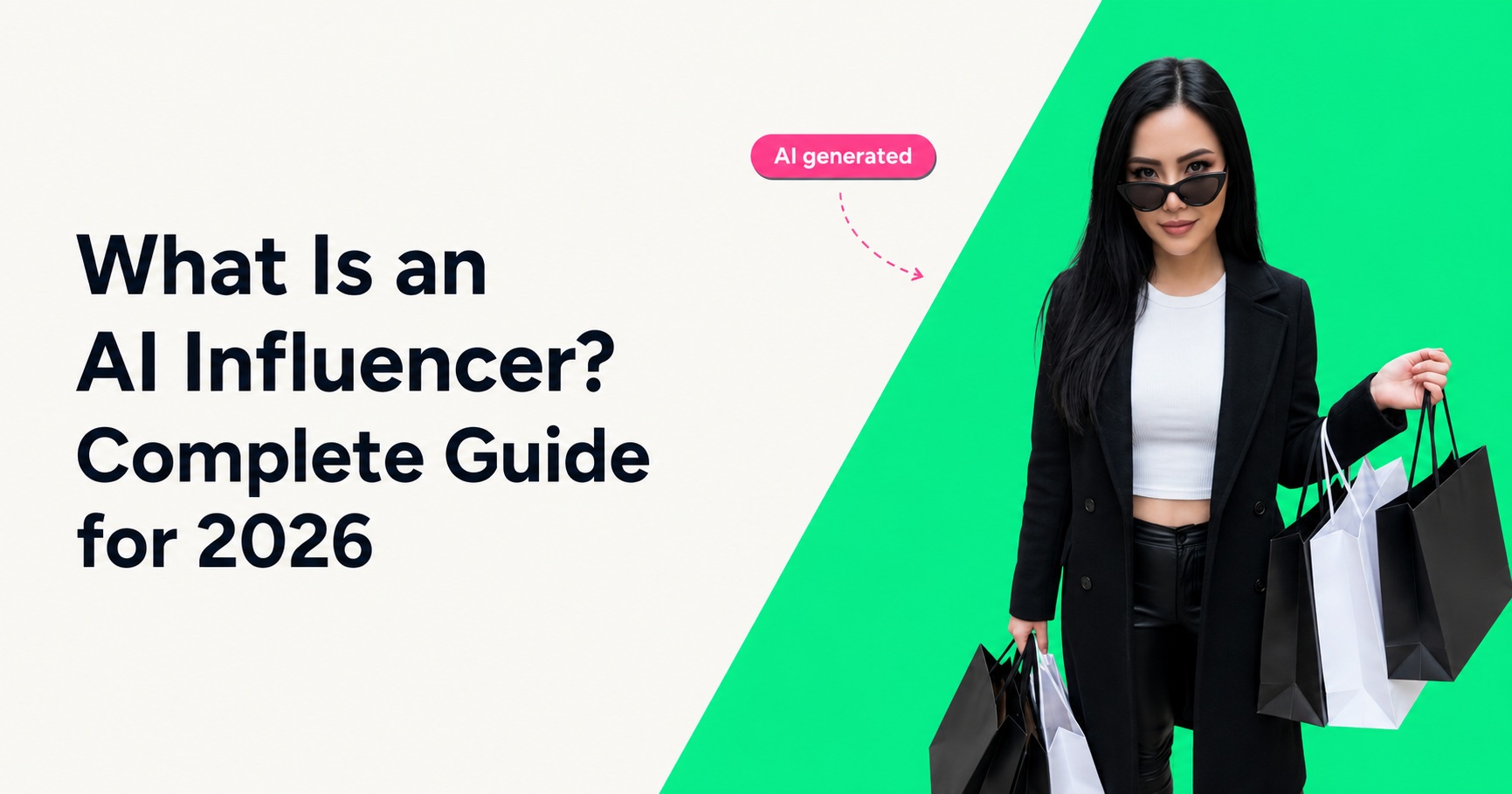
An AI influencer is a virtual or synthetic personality created or operated with artificial intelligence that publishes content, builds an audience and can influence attention, opinions or purchasing decisions. AI may be used to generate the character’s appearance, images, videos, voice and written content, but humans often still control the strategy, creative direction and business behind the account.
What Exactly Is an AI Influencer?
An AI influencer is a digital personality designed to function in many of the same spaces as a human influencer. It can have a name, appearance, personality, niche, social profiles and ongoing story. Followers may interact with the character through posts, comments, videos, direct messages or paid communities, even though the person they see on screen does not exist in the traditional sense.
The term covers a wide spectrum. Some AI influencers are photorealistic characters generated with modern image and video models. Others have a stylized or animated appearance. Some creators use AI for nearly every visible element, while others combine AI-generated faces with manually edited images, human-written scripts, real-world photography or conventional video production.
What matters is not whether every pixel was generated by AI. The defining idea is that the public-facing creator identity is synthetic or substantially AI-driven and is used to create content and build an audience.
How Do AI Influencers Work?
Behind most AI influencers is a workflow rather than a single tool. The process usually begins with a character concept: appearance, age range, style, niche, personality, tone of voice and the type of audience the creator wants to attract. From there, AI tools can be used to generate the visual identity and produce content around that character.
Image generation is often the foundation because it establishes what the creator looks like. Video generation, lip-sync, synthetic voice and talking-avatar technology can then make the character feel more dynamic. Language models can support captions, scripts, content ideas and audience communication. Publishing and analytics tools complete the workflow by helping creators distribute content consistently and learn what actually performs.
That does not mean the character is necessarily autonomous. In many cases, a human operator still decides what the AI influencer should say, where it should appear, which partnerships make sense and how the overall brand should evolve. AI reduces parts of the production workload, but strategy remains a human responsibility.
AI Influencer vs Virtual Influencer vs AI Creator
The terminology can be confusing because these categories overlap. A virtual influencer is a fictional digital personality that behaves like an influencer. Virtual influencers existed before today’s generative AI boom and could be created with CGI, 3D modeling, animation or other digital production methods.
An AI influencer is typically a virtual influencer whose appearance or content is created substantially with artificial intelligence. An AI creator is broader still. That term can describe a virtual personality that produces content without necessarily focusing on audience influence, recommendations or brand partnerships.
A useful way to think about it is this: virtual influencer describes the digital identity, AI influencer emphasizes the technology and influencer role, while AI creator describes the broader act of producing content with an AI-driven identity. In practice, creators and platforms often use the terms interchangeably, so there is no universally standardized taxonomy. For a closer comparison, read AI Creator vs AI Influencer: What’s the Difference?
Why AI Influencers Matter in 2026
The biggest change is accessibility. Building a convincing virtual character once required specialist 3D artists, animation teams and substantial production budgets. Generative AI has lowered that barrier dramatically. A small team, or even an individual creator, can now experiment with character design, visual content, video and voice without operating a traditional studio.
That changes the economics of creator production. A virtual creator can appear in locations that were never physically visited, test different styles quickly and create content formats that would be expensive or impractical with a traditional photo shoot. The character can also be designed around a very specific niche from the beginning rather than waiting for a personal brand to emerge organically.
At the same time, lower production barriers create more competition. Generating attractive images is increasingly easy. Building a memorable creator is not. As more AI-generated content enters social feeds, differentiation shifts toward character consistency, storytelling, niche expertise, community interaction and creative direction.
Can AI Influencers Really Build an Audience?
Yes, but the same basic rule applies to AI influencers as to human creators: content needs to give people a reason to care. Novelty can produce an initial click, but novelty alone rarely creates long-term audience value. A feed of unrelated AI-generated portraits may look impressive without giving followers any reason to return tomorrow.
Strong AI influencers are usually built around a recognizable concept. That could be fashion, travel, gaming, fitness, entertainment, lifestyle or a highly specific subculture. The character develops visual continuity and a consistent point of view. Over time, followers begin to recognize not just a face but a personality and content pattern.
This is why audience strategy matters as much as generation quality. The goal is not simply to create realistic content. It is to create a repeatable relationship between character and audience. Our guide AI Influencer Content Strategy: How to Grow an Audience That Actually Engages goes deeper into that part of the process.
How Do AI Influencers Make Money?
AI influencers can use many of the same monetization models as human creators. Brand partnerships and sponsored content are an obvious route once a character has an audience that companies want to reach. Affiliate marketing can connect product recommendations directly to sales, while digital products and licensing can turn the character or its content into intellectual property with value beyond social media reach.
Subscription platforms add another model by allowing creators to monetize their most engaged followers directly. Fanvue, for example, maintains dedicated resources for AI Creators and states that fully AI-generated content is permitted subject to its AI-content and community rules. This makes the platform particularly relevant to creators who want to build paid communities around virtual personalities.
The important point is that monetization follows audience value. A beautiful AI character with no clear audience or content strategy is still just an asset. A recognizable creator with engaged followers can become a business. For a detailed breakdown, see How to Make Money With AI Influencers: 7 Monetization Strategies for 2026.
What Are the Biggest Challenges?
Character consistency remains one of the first practical challenges. If facial features, body proportions, hair or overall style change too much between posts, the illusion of a persistent personality breaks down. Modern workflows can reduce these inconsistencies, but creators still need a controlled visual system rather than relying on isolated prompts.
Trust and transparency are equally important. Followers, platforms and advertisers increasingly expect clarity around synthetic content and commercial relationships. In the United States, the Federal Trade Commission’s endorsement guidance covers virtual influencers and requires material relationships with brands to be disclosed clearly. Requirements vary by jurisdiction and platform, so creators should treat disclosure and platform policies as part of the publishing workflow rather than an afterthought.
There are also rights and moderation issues. Using the likeness of a real person without permission, creating deceptive deepfakes or publishing prohibited synthetic content can create serious problems. A sustainable AI influencer should be built as an original character with a clear ownership trail, documented source material and respect for the rules of every platform on which it appears.
How Do You Create an AI Influencer?
The best place to start is not with a prompt. Start with the creator concept. Decide who the character is, what niche it belongs to, what makes it recognizable and why someone should follow it. A strong concept makes every later decision easier, from clothing and locations to captions, video ideas and monetization.
Next comes visual consistency. Establish the character’s key features and build a repeatable image workflow before producing hundreds of posts. Once the identity is stable, expand into different content formats, develop a publishing rhythm and begin testing which themes attract engagement. Social growth should happen alongside production rather than after an enormous content library has already been created.
Finally, think about monetization as part of the business model rather than the first objective. Audience, positioning and trust usually need to exist before monetization becomes meaningful. If you want the complete process from concept to launch, read How to Create an AI Influencer in 2026: Step-by-Step Guide.
Key Takeaways
- An AI influencer is a synthetic or virtual personality that uses AI to create content and build an audience.
- AI can generate images, video, voice and text, but many AI influencers are still strategically managed by humans.
- AI influencer, virtual influencer and AI creator overlap, but they emphasize different aspects of the same emerging creator category.
- Generative AI has made virtual creator production far more accessible, but strong character design and audience strategy remain difficult to replicate.
- AI influencers can monetize through brand deals, affiliate marketing, digital products, licensing and subscription communities.
- Consistency, disclosure, rights management and platform compliance are essential parts of building a sustainable virtual creator business.
FAQ
Are AI influencers real people?
Usually not. An AI influencer is generally a fictional or synthetic personality whose public identity is digitally created. However, some workflows combine AI-generated elements with real photography, performers or human-operated accounts, so the production process can vary significantly between creators.
Is an AI influencer the same as a virtual influencer?
Not necessarily. Virtual influencer is a broader term for a fictional digital personality and can include characters created with CGI or traditional animation. AI influencer usually implies that artificial intelligence plays a significant role in creating the character or its content.
Do AI influencers run themselves automatically?
They can include automated elements, but most do not need to be fully autonomous. Humans often control creative direction, content approval, partnerships and publishing decisions while AI handles parts of production such as images, video, voice or writing.
Can AI influencers make money?
Yes. Potential revenue models include sponsored content, brand partnerships, affiliate commissions, digital products, licensing and paid subscription communities. The commercial potential depends less on the fact that the creator uses AI and more on whether it has a valuable, engaged audience.
Does Fanvue allow AI influencers?
Yes. Fanvue has dedicated guidance for AI Creators and states that fully AI-generated content is allowed, subject to its Community Guidelines and AI-content policies. Creators should check the current platform rules before publishing because policies can change over time.
Final Thoughts
AI influencers are not simply digital models with realistic faces. The technology makes the character possible, but the creator business is built around everything that comes afterward: consistency, content, audience, trust and monetization.
That distinction will become even more important as generative tools improve. When almost anyone can create a convincing virtual character, visual novelty stops being a competitive advantage. The AI influencers that stand out will be the ones that feel intentional, recognizable and worth following.