
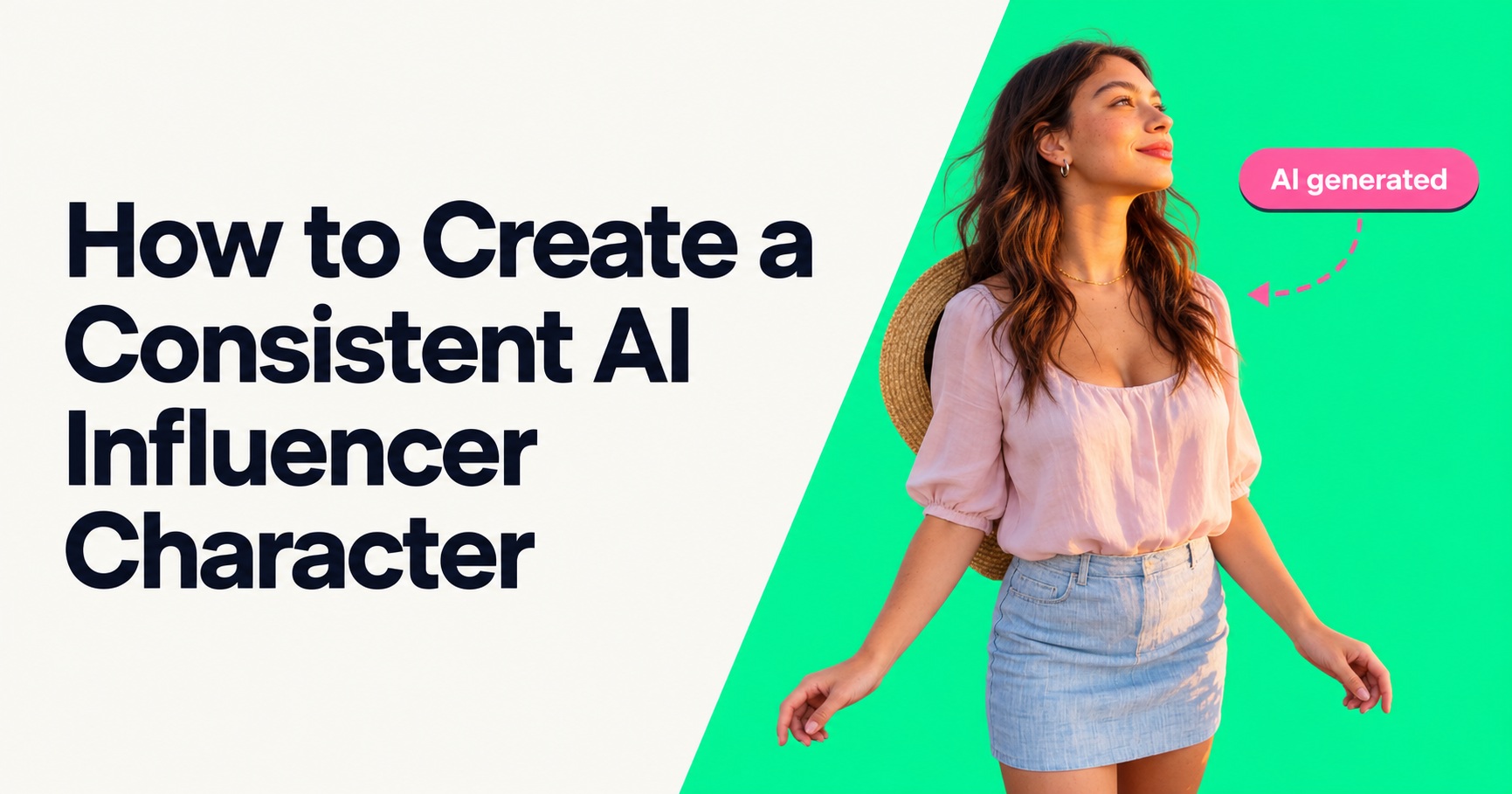
A convincing AI influencer is not defined by one perfect image. It is defined by what happens in image number 20, 50 or 200. Does the character still look like the same person? Does the audience recognize the face immediately? Do the hair, age, proportions and personality remain stable even when the outfit, location or camera angle changes?
That is the real challenge of AI character consistency. Generative image tools are designed to create variation, while an influencer brand depends on recognition. The solution is not to eliminate variation, but to control which elements are allowed to change and which ones must remain fixed. To understand the wider production process, see How Do AI Influencers Work? From Character to Content.
Quick Answer
To create a consistent AI influencer character, define the character before producing content, build a small library of approved reference images, lock permanent traits such as facial structure, hair and age, and use those references throughout future generations. Vary scenes, outfits and poses while keeping the identity anchors stable. Review every output against the reference set and reject images that introduce visible character drift.
Start With a Character Specification, Not a Prompt
The first step is deciding who the character is before asking an image model to generate content. A single prompt such as “beautiful brunette influencer in Paris” is too vague to create a durable identity. It describes a category of person, not a specific person.
A useful character specification separates permanent traits from flexible traits. Permanent traits might include facial shape, eye color, hairstyle, approximate age, skin tone, body type and signature visual details. Flexible traits include clothing, makeup intensity, location, pose, expression and lighting. The permanent traits create recognition; the flexible traits create content variety.
Write these rules down. A simple character sheet can include appearance, personality, niche, tone of voice, favorite styles and visual boundaries. This becomes the source of truth when the character evolves over time.
Build a Small Set of Approved Reference Images
Do not generate hundreds of images immediately. Start by creating a small number of images that represent the character correctly, then approve the strongest ones as references.
A useful reference set should show the face clearly from more than one angle. Include at least a front-facing portrait, a three-quarter view and one or two wider shots that reveal body proportions. Current commercial AI workflows increasingly support this approach directly. Adobe’s 2026 Firefly guidance, for example, recommends multiple character views and reference portraits to preserve likeness across scenes.
The important part is quality, not quantity. If the reference images already disagree with one another, future generations will inherit that inconsistency. The approved set should feel unmistakably like one person before it becomes the foundation for new content.
Treat those reference images as brand assets. Do not replace them every time a new generation looks slightly better. Constantly changing the source identity is one of the fastest ways to create gradual drift.
Separate Identity From Styling
One common mistake is encoding too much styling into the character itself. If every reference image shows the same black dress, heavy makeup and studio lighting, the generation system may start treating those elements as part of the identity.
A better workflow separates who the person is from how the person is styled. The face, age, proportions and core hairstyle belong to identity. Clothing, makeup, environment, camera lens and lighting belong to the scene.
This separation gives the character room to behave like a real influencer. A human creator can wear gym clothes one day and formalwear the next without becoming a different person. Your AI influencer should work the same way.
When you build reference data or custom models, include enough controlled variation that the system learns the person rather than one specific photo. Adobe’s current custom-model guidance similarly recommends variety in poses, perspectives and backgrounds while keeping the core subject consistent.
Use Reference-Based Generation Instead of Prompt Memory
Text descriptions help, but prompts alone are not reliable enough for long-term identity consistency. Small wording changes can produce a different nose, jawline, eye spacing or apparent age even when the prompt still describes the same general person.
Reference-based generation is more stable because the model receives visual information about the identity rather than reconstructing that identity from text every time. Depending on the tool, this may involve reference images, character references, identity conditioning, edit workflows, fine-tuned models or custom character models.
The names of these features change quickly. Midjourney, for example, moved from Character Reference to Omni Reference and then replaced those older workflows with its newer Edit Model in V8.x. The broader principle remains stable: use a visual source of truth whenever the tool supports it.
For a production workflow, save the exact reference set and generation settings used for the character. Reproducibility matters more than remembering which prompt happened to work last week.
Create a Reusable Prompt Structure
Once the identity is anchored visually, prompts should focus mainly on the scene. A consistent structure helps because it prevents important production details from being added randomly.
A useful prompt template can follow this order:
Character reference → activity → location → outfit → expression → camera framing → lighting → visual style
For example, you might keep the same reference character while changing only the activity and setting: walking through a hotel lobby, sitting in a cafe, filming a gym mirror clip or attending an evening event.
Keep permanent appearance descriptions short once visual references are doing the heavy lifting. Repeatedly adding excessive detail about facial anatomy can sometimes create more instability rather than less. The goal is to direct the scene without asking the model to redesign the character.
Build Consistency in Layers
A character can have a stable face and still feel inconsistent. Real creator recognition comes from several layers working together.
The first layer is physical identity: face, hair, age and proportions. The second is visual brand identity: preferred colors, fashion range, photography style and environments. The third is behavioral identity: expressions, poses and recurring habits. The fourth is personality identity: how the creator speaks, reacts and tells stories.
This matters because followers rarely recognize an influencer from facial geometry alone. They recognize patterns. The same person has a familiar way of dressing, framing photos, writing captions and interacting with the audience.
For that reason, your character bible should eventually contain more than appearance. Include tone of voice, recurring interests, content pillars and behaviors that make the virtual personality recognizable even when the face is not shown prominently.
Review Every Generation for Character Drift
Character drift is the gradual change that happens when generated content begins moving away from the original identity. It can be obvious, such as a different eye color, or subtle, such as a narrower jaw, different hairline or younger-looking face.
Create a simple review process before content is approved. Compare each image with the reference set and check the same identity anchors every time: facial proportions, eyes, nose, jaw, hair, age, skin tone and body proportions. If two people reviewing the image would hesitate about whether it is the same character, the image should probably not be published.
Do not keep weak generations just because the outfit or background is excellent. It is usually easier to regenerate the scene than to repair an identity that no longer matches the character.
This quality-control step is especially important when content is generated in batches. Producing 50 images quickly can save time, but it can also scale inconsistency if no one is checking the outputs against the source identity.
Keep a Character Asset Library
Once the character is stable, organize the assets that make it repeatable. Store the approved references, prompt templates, model settings, preferred aspect ratios, voice settings, personality notes and best-performing examples in one place.
This becomes increasingly valuable when more than one person works on the creator. A designer, video editor or automation system should not need to reinvent the character every time. They should be able to work from the same rules.
Version the character deliberately. If you decide to change the hairstyle, age the character slightly or update the visual style, treat that as a conscious brand update rather than allowing the change to happen accidentally through generations.
A stable asset library also makes future expansion easier. When you begin creating video, talking avatars or premium content, the same identity references can guide those formats instead of starting from zero.
Do Not Confuse Consistency With Repetition
A consistent AI influencer should not look like the same image recreated endlessly. If every post uses the same pose, facial expression, camera angle and background, the feed may be technically consistent but creatively weak.
The goal is identity consistency with content variety. Keep the person stable while changing the context. Show different locations, distances, expressions, outfits, activities and formats. A real creator is recognizable because the identity remains stable across variety, not because every photo looks identical.
This balance becomes easier once the character system is mature. The reference images protect the identity while the content strategy creates novelty.
That is also where consistency begins supporting growth. A recognizable character gives the audience something familiar, while varied content gives them a reason to keep paying attention.
From Consistent Character to Creator Brand
Character consistency is the foundation, not the final goal. Once the person looks stable across content, the next step is making the audience care about that person.
Add recurring themes, opinions, routines and story elements. A fashion-focused character may develop a recognizable taste in clothing. A travel character can have favorite destinations and recurring travel habits. A fitness creator might follow a specific training philosophy. These details make the character easier to remember because the identity exists beyond appearance.
This connects directly to the wider creator funnel. First you create a recognizable character. Then you grow an audience around consistent content. Finally, you monetize that audience through brand deals, affiliate offers, digital products or platforms such as Fanvue.
If you are still building the overall creator workflow, start with How to Create an AI Influencer in 2026: Step-by-Step Guide. If the character is already stable and you need to grow the audience, continue with AI Influencer Content Strategy: How to Grow an Audience That Actually Engages.
Key Takeaways
- Define the AI influencer’s permanent traits before producing large amounts of content.
- Separate identity traits from flexible styling so outfits and scenes can change without changing the person.
- Build a small, high-quality reference set showing the character from several useful angles.
- Use visual references or identity-conditioning tools instead of relying on text prompts alone.
- Create reusable prompt structures for scenes, clothing, framing and lighting.
- Review every output for facial, age, hair and body-proportion drift before publishing.
- Maintain a character asset library so the same identity can be reproduced across images, video and other formats.
- Consistency does not mean repetition. Keep the identity stable while varying context and content.
- Extend consistency into personality, tone and recurring behavior so the character becomes a recognizable creator brand.
FAQ
Why does my AI influencer look different in every image?
The most common reason is that the workflow relies too heavily on text prompts and does not use a stable visual identity reference. Generative models naturally introduce variation, so a consistent character usually needs approved reference images, repeatable settings and a review process that rejects outputs with visible identity drift.
How many reference images do I need for a consistent AI character?
There is no universal number because workflows differ. A small set of high-quality images showing the same person clearly from several useful angles is often more valuable than a large inconsistent dataset. If you train a custom model, the tool may require a larger and more varied image set.
Should my AI influencer always wear the same clothes?
No. Clothing should usually be treated as a flexible scene element rather than a permanent identity trait. A strong AI influencer remains recognizable in different outfits, locations and lighting conditions while the core face, age, proportions and personality stay stable.
Can I change my AI influencer’s appearance later?
Yes, but make changes deliberately. A new hairstyle, makeup style or visual direction can become part of the character’s evolution, just as a human influencer changes over time. Update the reference library when the change is intentional so future generations do not mix old and new identities unpredictably.
Is character consistency enough to grow an AI influencer?
No. Consistency creates recognition, but growth still depends on content quality, niche, storytelling and audience strategy. A perfectly consistent character that posts repetitive or uninteresting content will still struggle to build an engaged audience.
Final Thoughts
The easiest way to create an inconsistent AI influencer is to treat every image as a fresh generation. The strongest workflows do the opposite. They define the person once, protect that identity with references and rules, and then create variety around it.
That shift changes AI image generation from experimentation into production. Instead of asking whether the next image looks good in isolation, you ask whether it belongs to the same creator brand.
When the answer stays yes across dozens of scenes, outfits and formats, the character stops looking like a collection of AI images and starts feeling like someone the audience can recognize.